Item Response Theory Modelling of the Trait Emotional Intelligence Questionnaire-Short Form: Item Streamlining, Differential Item Functioning, and Validity in a Swedish Multicenter Cross-Sectional Study

We applied IRT to evaluate and refine the 30-item Trait Emotional Intelligence Questionnaire-Short Form (TEIQue-SF) in a Swedish sample of 845 healthcare and social work students. IRT identified underperforming items, yielding a refined 12-item version that effectively captures trait EI with good reliability and strong convergent validity.
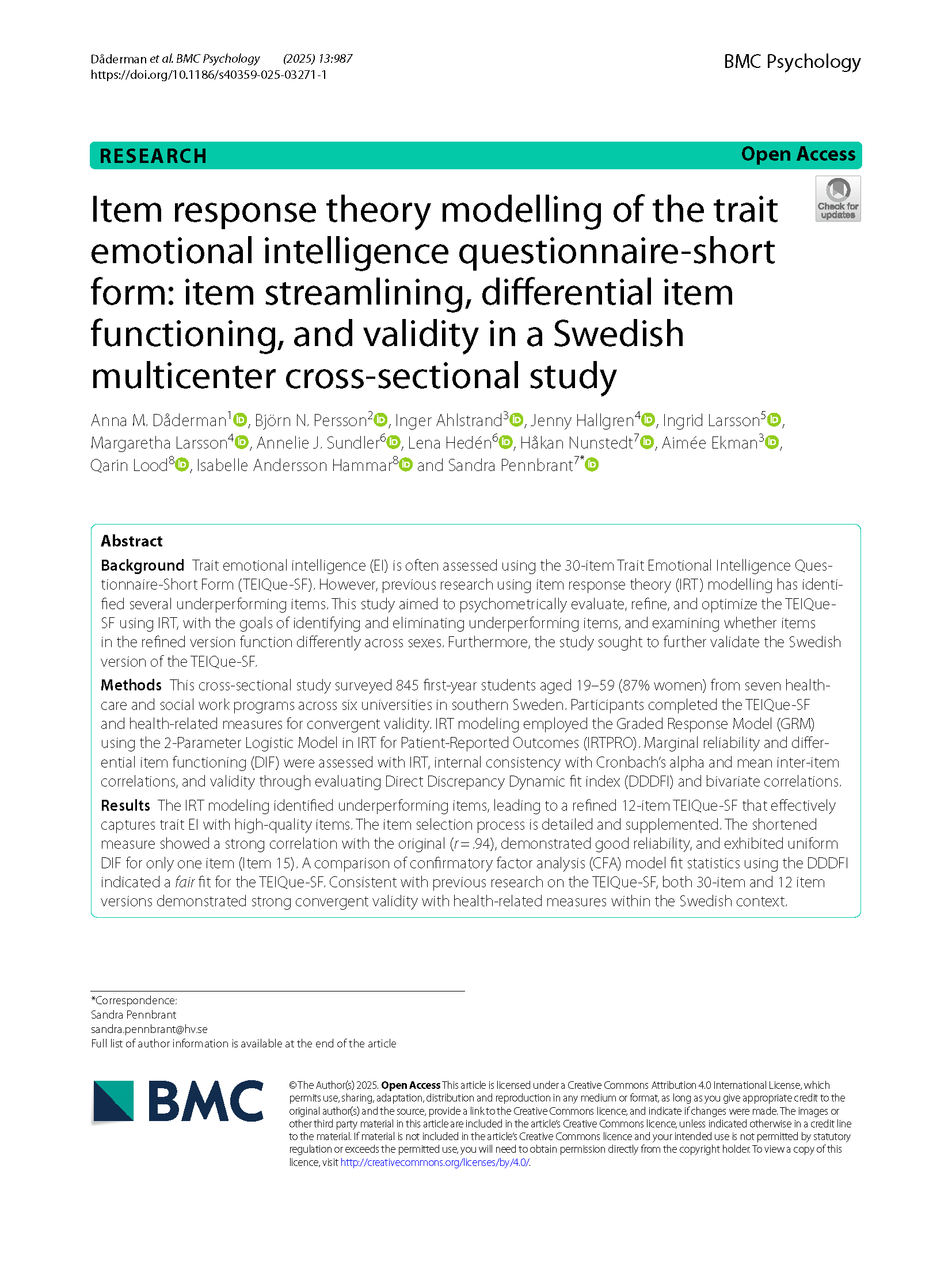
August 2025 · Anna M. Dåderman, Björn N. Persson, Inger Ahlstrand, Jenny Hallgren, Ingrid Larsson, Margaretha Larsson, Annelie J. Sundler, Lena Hedén, Håkan Nunstedt, Aimée Ekman, Qarin Lood, Isabelle Andersson Hammar, Sandra Pennbrant
Paper preview

Validation of Subjective Well-Being Measures Using Item Response Theory

We applied IRT to validate three subjective well-being scales in a sample of 1,000 participants. All scales showed high item discrimination values and varied difficulty parameters. Negative affect and extreme latent scores were less reliably measured, while cognitive and social well-being components were covered equally well.

January 2020 · Ali Al Nima, Kevin M. Cloninger, Björn N. Persson, Sverker Sikström, Danilo Garcia
Paper preview

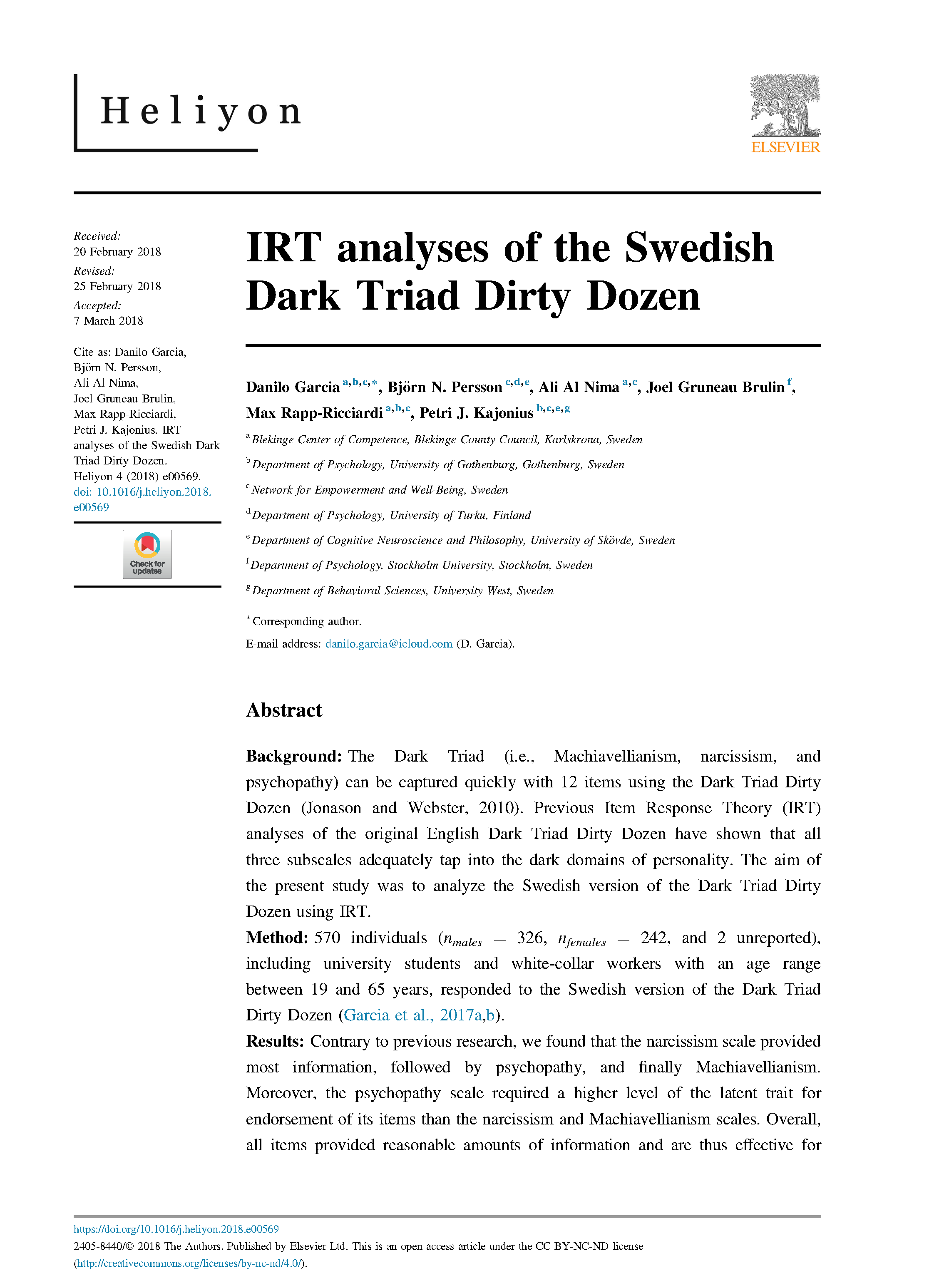
IRT Analyses of the Swedish Dark Triad Dirty Dozen

We applied Item Response Theory to the Swedish Dark Triad Dirty Dozen (N = 570). Contrary to findings on the English version, narcissism provided most information, followed by psychopathy, then Machiavellianism. Psychopathy items required higher latent trait levels for endorsement, possibly reflecting Swedish cultural conditions.

March 2018 · Danilo Garcia, Björn N. Persson, Ali Al Nima, Joel Gruneau Brulin, Max Rapp-Ricciardi, Petri J. Kajonius
Paper preview

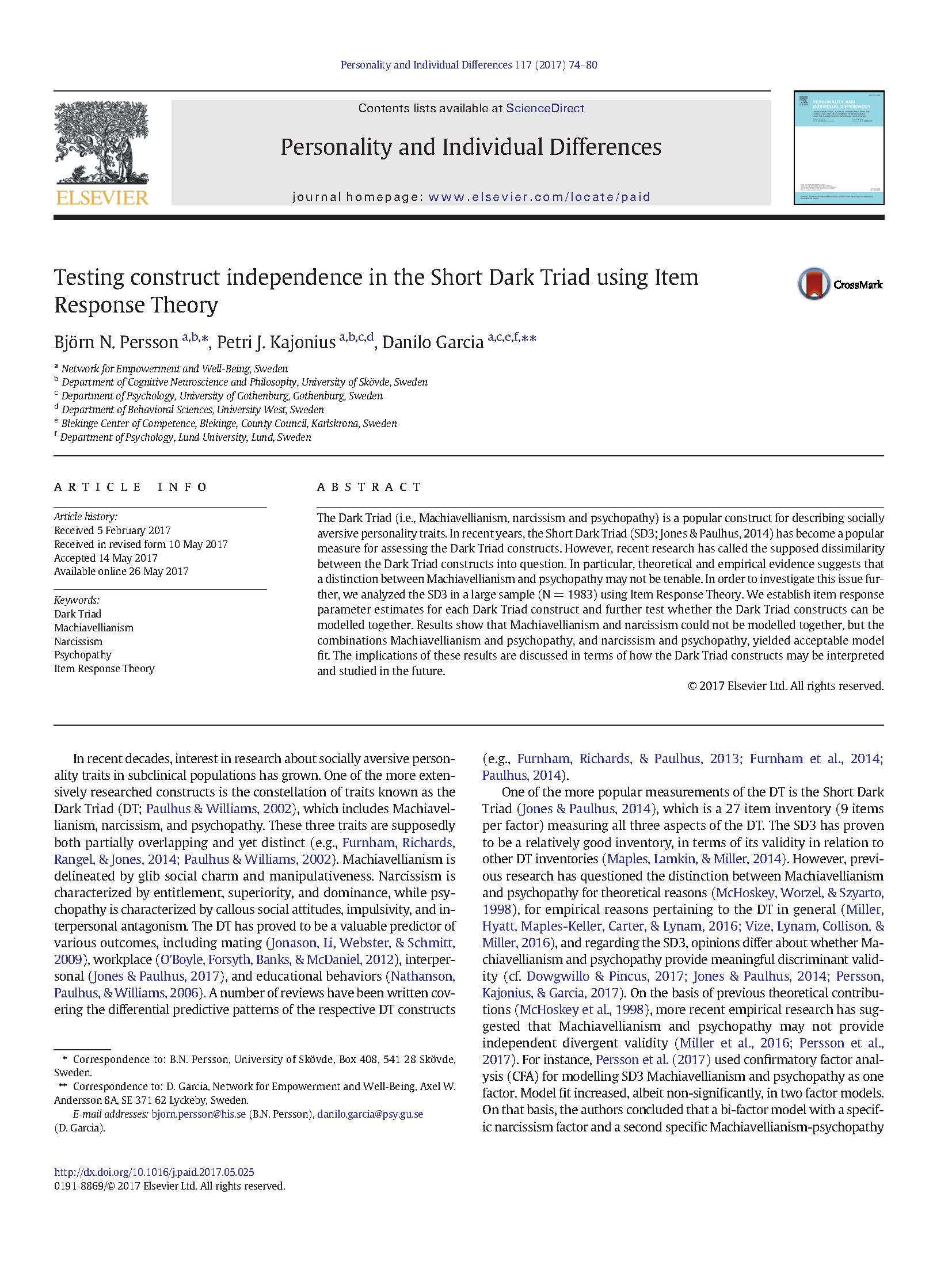
Testing Construct Independence in the Short Dark Triad Using Item Response Theory

We analyzed the Short Dark Triad (SD3) in a large sample (N = 1,983) using Item Response Theory. Machiavellianism items showed lower endorsement thresholds than psychopathy items. IRT model fit testing showed that Machiavellianism and narcissism could not be modelled together, while Machiavellianism-psychopathy and narcissism-psychopathy combinations yielded acceptable fit.

May 2017 · Björn N. Persson, Petri J. Kajonius, Danilo Garcia
Paper preview

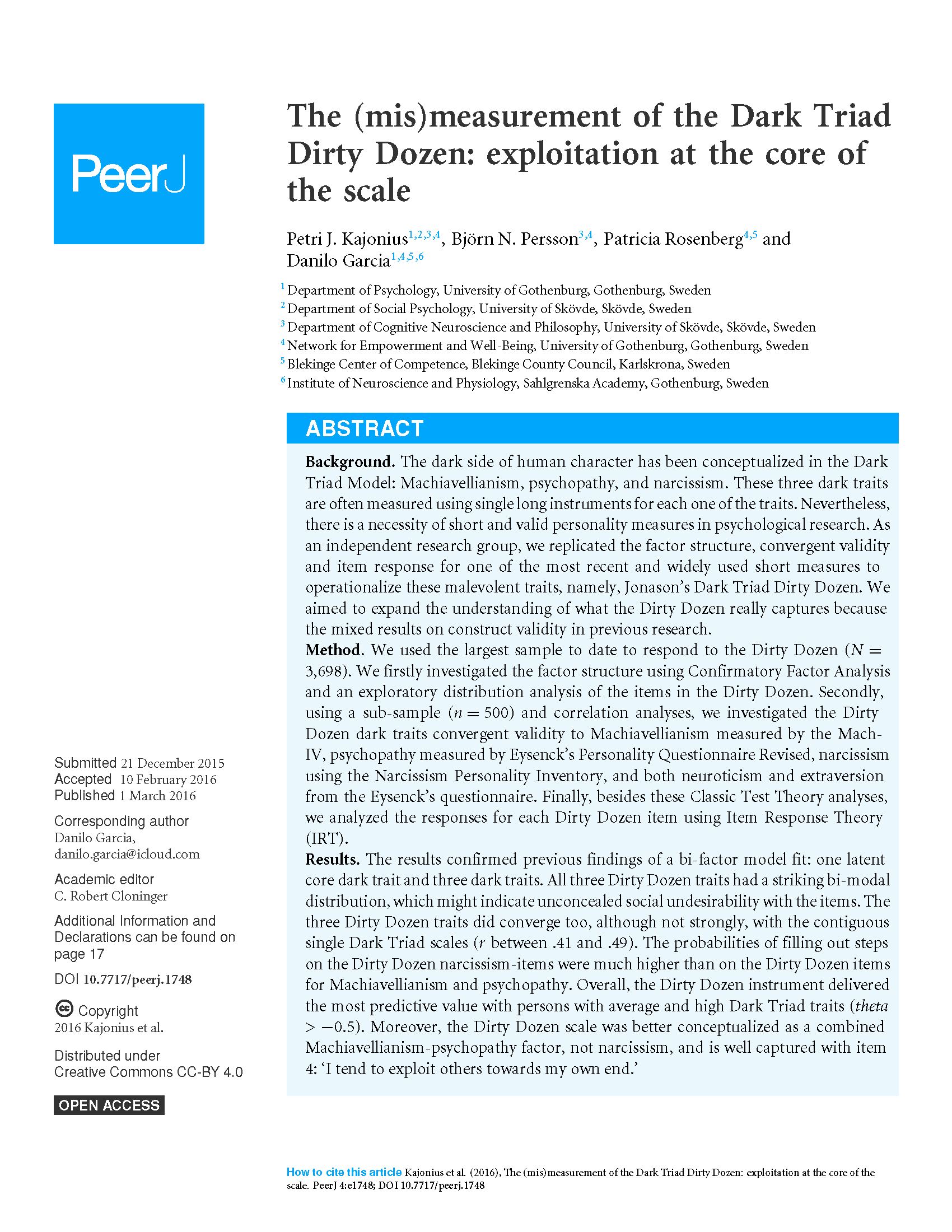
The (Mis)measurement of the Dark Triad Dirty Dozen: Exploitation at the Core of the Scale

We replicated the factor structure and item response properties of the Dark Triad Dirty Dozen (DD) in a sample of 3,698. Results confirmed a bi-factor model, but suggest the DD is best understood as a combined Machiavellianism-psychopathy factor, with its core captured by a single exploitativeness item.

March 2016 · Petri J. Kajonius, Björn N. Persson, Patricia Rosenberg, Danilo Garcia
Paper preview